
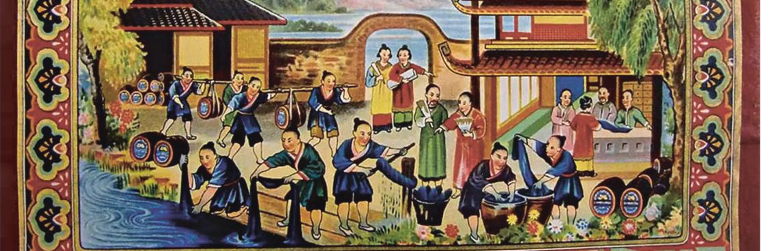
Image 1: A dye label of BASF synthetic indigo packaging for the Chinese market (© BASF Corporate Archives.).
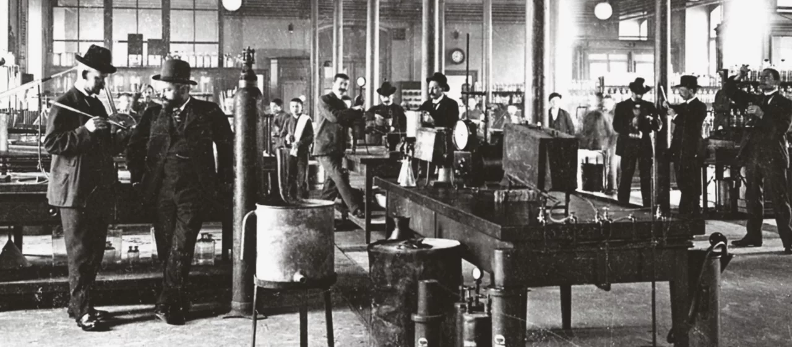
image 2: Chemists at BASF's indigo laboratory in Ludwigshafen. Synthetic indigo became one of the bestsellers in China (© BASF Corporate Archives.).
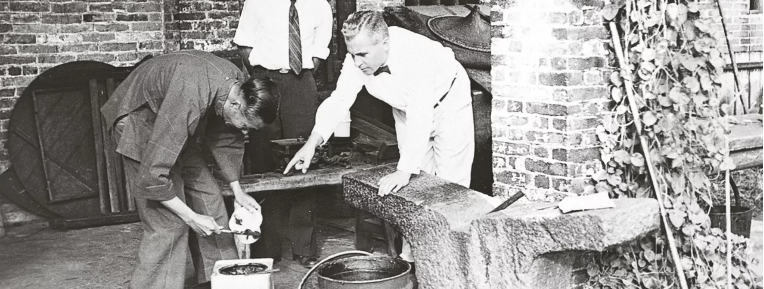
Image 3: Defag employee Rudolf Schiffler explaining the correct application of chemical dyes to a Chinese customer (© Estate of Marion Schiffler.).
Colorful Encounters: Nature, Science, and Dyes between Europe and China, 1880–1950
In the context of the industrialization of chemistry and global modernization from the late nineteenth to the mid-twentieth century, Lejie Zeng’s project examines how the encounter between synthetic dyes from Europe and natural dyes from China shaped the exchange between “nature-based” and “science-based” bodies of knowledge in different regions.
By recovering the materiality of color and tracing how dyes operated across local, cross-regional, and global boundaries, bringing together seemingly disparate human actors (dyers, chemists, compradors) and gender groups (male elites, modern women) to co-compose global knowledge, the project challenges long-established dichotomies between East and West and between experimental science and traditional crafts.
Knowledge and material exchanges across uneven borders have never presented a romantic picture, but are intricately entangled with the redistribution of global resources and geopolitical power. Lejie seeks to mark out a dynamic space of frictions, confluences, and negotiations, asking why and how these boundaries were formed.
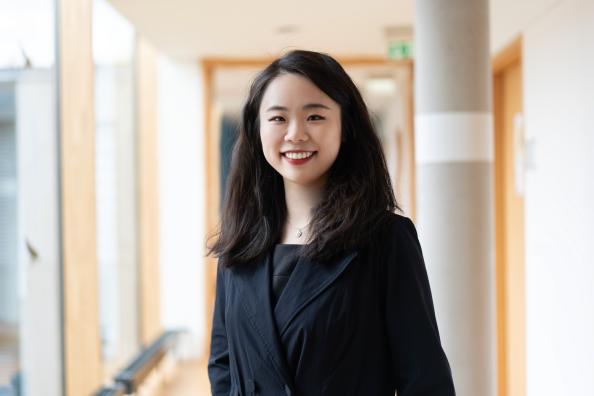
Lejie Zeng holds a BA in media arts from Tongji University in Shanghai and an MA in media studies from Humboldt-Universität zu Berlin, where she won a Humboldt Research Track Scholarship in 2021. During her studies, she was a research assistant at the Humboldt-Universität and a researcher at the Berliner Werkstatt für Sozialforschung.
Publications & Presentations
Articles:
Omri Polatsek, Jonathan Haid, and Lejie Zeng. “From Natural to Synthetic? Rethinking Narratives of Chemical ‘Replacement’ in the Nineteenth and Twentieth Centuries.” Feature Story, no. 87, Max Planck Institute for the History of Science. https://www.mpiwg-berlin.mpg.de/feature-story/natural-synthetic-rethinking-narratives-chemical-replacement-nineteenth-and-twentieth
Presentations:
December 2023: "Supplying Colors and en-Route Science: German Synthetic Dyestuffs in Modern China in the Early 20th Century," HASS Colloquium Series, Singapore University of Technology and Design (SUTD).
March 2024: "Making China Blue: Dyestuff Production and Vernacular Industrialism in Modern China, 1900s–1940s," panel talk at The Association for Asian Studies Annual Conference (AAS), Seattle.
October 2024: "Fabricated Blue: A Marketing History of German Synthetic Indigo Dyes in Republican China," presentation at the workshop Fabricated Natures: Stories from the Bio-Material Archive, organized by the Proteins and Fibers Working Group, Max Planck Institute for the History of Science, Berlin.
March 2025: "Logistics and Technological Adaptation in the Synthetic Dye Trade between Germany and China in the 20th Century," panel talk at the annual conference Un:chaining – Mikrogeschichten des multilokalen und globalen Fertigens, Deutsches Technikmuseum, Berlin.
June 2025: "The Revival of Natural Indigo Dye and Vernacular Industrialism in Wartime China," panel talk at the 14th International Conference on the History of Chemistry (14ICHC), Valencia.
Organized Events:
January 2025: Colloquium Chemicalized Knowledge – Writing History with Chemicals, invited guest: Prof. Dr. David Edgerton, co-organized with Jonathan Haid and Omri Polatsek, IMPRS Colloquium.